Sleep setup guide
Malouf Adjustable Bases: How to Assess Zero-Gravity and Lumbar Features
An adjustable base can turn a flat mattress into a more flexible place to sleep, read or unwind. But feature names do not tell the whole story. To compare Malouf adjustable bases thoughtfully, look beyond labels such as “zero gravity” and “lumbar support”: check what moves, what can be adjusted independently, whether the mattress is compatible and whether the controls suit your everyday routine.
Published 14 November 2026
Start with the movement, not the marketing
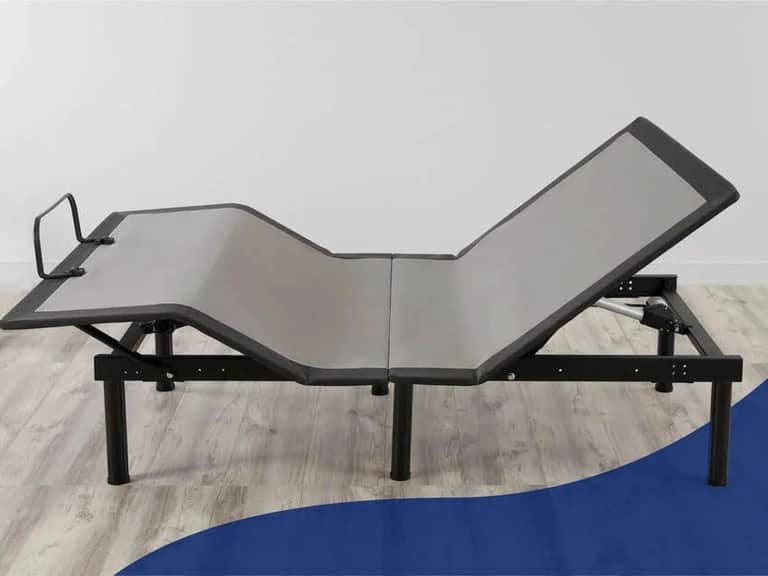
An adjustable bed base changes the angle of the mattress by raising or lowering sections of its platform. Many models let you elevate the head, the foot or both. That simple movement can make the bed more versatile: a raised head may feel useful for reading, while an elevated leg section can create a different resting posture. The experience depends on the base’s range of motion, the mattress and the person using it.
Names for preset positions can sound more precise than they are. “Zero gravity,” for instance, is commonly used for a reclined posture that raises the upper body and legs. It is not a literal state of weightlessness, nor does the phrase alone prove that a particular position will feel comfortable or provide a medical benefit. The meaningful questions are practical: can you reach a position that feels natural, can you adjust it gradually, and can you return to it reliably?
When assessing a Malouf model, confirm the exact functions listed for that particular base. Features can vary between ranges and versions, and a product name or brand association is not enough to establish what a model includes. Look for the specification sheet, operating guide and warranty details for the precise model and size you are considering.
What “zero-gravity” positioning means in practice
A zero-gravity preset generally raises the head and knees to create a reclined, supported shape. The head section may rise more than the foot section, or the legs may lift enough to change the relationship between the knees and hips. The exact angle and sequence vary by base. Some remotes offer a one-touch preset; others allow the user to move the head and foot sections separately and save a preferred arrangement.
Rather than assuming the preset is automatically right for you, treat it as a starting point. Small changes in angle can alter pressure and posture. A position that feels relaxing for a short spell may not be the one you want for a whole night. Use the controls slowly, notice whether your body feels supported, and check that you can lie comfortably without sliding or feeling a sharp bend at the waist.
Consider how the position fits your actual habits. If you regularly read in bed, a preset intended for lounging may be more relevant than a collection of specialised modes. If you mostly sleep flat, smooth, easy-to-use head and foot adjustment may matter more than multiple stored settings. A feature earns its place when it makes a routine task easier—not simply because it appears on a product list.
- Check the range: Does the base offer enough movement to reach a comfortable posture, without requiring awkward workarounds?
- Check independent control: Can you raise the head and feet separately, or are you limited to a small group of preset combinations?
- Check fine adjustment: Can you make small corrections after selecting a preset?
- Check return-to-flat operation: Is it simple to bring the base back to a level position?
- Check the remote: Are the buttons clear and reachable, and can you use the controls in low light?
Lumbar support: preset or separate adjustment?
Lumbar support refers to support around the lower back. On an adjustable base, that phrase can describe different things. A base may change the overall bed angle in a way that some people experience as supportive, or it may include a distinct lumbar mechanism that changes the contour of the mattress platform in the lower-back area. Those are not the same feature.
Ask whether lumbar adjustment is an independently controlled movement or simply part of a preset. If it is independent, find out how it operates, how much adjustment is possible and whether it can be used while the head and foot sections remain in a chosen position. If “lumbar support” appears only in general promotional language, request a clear description of the mechanism before treating it as a separate function.
Comfort is personal. A pronounced contour may feel supportive to one sleeper and intrusive to another. Mattress construction also affects how a platform’s shape is felt at the surface. A flexible mattress may respond differently from a rigid one, and the same person may prefer a different setup for reading than for sleeping. Avoid interpreting the term as a promise to correct back pain or treat a health condition. If pain is persistent or concerning, seek advice from a qualified health professional rather than relying on a bed feature as treatment.
When trying a base in person, compare positions in a deliberate order: lie flat first, then raise the head slightly, then alter the foot section, and finally test the lumbar control if present. Pause in each position long enough to notice pressure, ease of breathing and whether your body feels supported. A dramatic setting is not necessarily a better one; subtle adjustments may prove more useful.
Compatibility is part of the feature checklist
A base and mattress work as a system. Before choosing a base, confirm that the mattress is designed to flex with an adjustable platform and that the manufacturer permits the intended use. Check the mattress warranty as well: some terms specify the types of foundations or operating conditions that are acceptable. Do not assume that a mattress will be suitable simply because its dimensions match the base.
Also confirm the size and configuration. A single large mattress on one moving platform behaves differently from two separate mattresses on independently adjustable sides. In a split arrangement, each sleeper may be able to choose a different position, but the setup can affect mattress selection, bedding and how a shared bed feels in the middle. Ask whether the specific base supports the configuration you want, and whether any linking or synchronisation function is included.
For a reference point, the site lists a Casper Adjustable Base 2023, described as offering wireless head and foot adjustment, preset positions and options for independent sides or a larger mattress that moves in sync. Its listing says it works with Casper mattresses and can be used in certain existing-frame or standalone arrangements. That information applies to this listed Casper product; it should not be taken as a specification for a Malouf base or as proof that it will suit every mattress or bed frame.
A second listed option, the Casper Adjustable Base, is described as providing head and foot adjustment by wireless remote and as being designed to fit into most existing bed frames or work standalone with a headboard. Again, these are product-specific claims. For any Malouf model, verify its own frame requirements, mattress guidance and configuration details directly in the documentation for that model.
Room, power and frame: the details that shape daily use
An adjustable base occupies more than the footprint of a mattress. Moving sections need clearance, and the base may sit differently from the platform or slatted frame it replaces. Measure the room, the existing frame’s internal dimensions and the access route into the bedroom. Check whether the intended setup requires removing slats, a centre support or other components; do not modify a frame unless its instructions allow it.
Power access deserves equal attention. Identify where the cable will reach, whether the outlet remains accessible once the bed is in place and how the cable can be kept clear of moving parts. The motor and controls also make an adjustable base an electrical appliance, so review the manufacturer’s operating and safety instructions. Keep cables routed as directed, and do not operate the mechanism if something is caught beneath the platform.
Think through practical use before installation. Will the bed need to move through a narrow stairwell? Is there enough space for a headboard or bedside table when the bed is elevated? Could under-bed storage interfere with movement? If the base has a minimum clearance or specific support requirements, follow those instructions rather than relying on assumptions about a conventional bed frame.
Noise, control placement and ease of returning to flat can become important over time. If possible, test the motor from the position in which you will use it. For online purchases, read the current manual and return conditions, and confirm what assembly or delivery entails. These ordinary logistics can make the difference between a clever feature and a useful one.
A straightforward way to compare models
Product pages can place many features side by side, but a short, consistent comparison is often clearer. Start with the needs you already know: the positions you use, whether you share the bed, what mattress you own and how the base must fit into the room. Then compare only verified specifications for the exact model and size.
| What to assess | Questions to ask | Why it matters |
|---|---|---|
| Positioning | Can head and foot sections move independently? Is there a zero-gravity preset, and can it be fine-tuned? | Shows whether the base can adapt to different activities and preferences. |
| Lumbar function | Is lumbar adjustment a separate mechanism, or part of a preset position? | Clarifies what the feature actually changes and how much control it provides. |
| Controls | Is the remote wireless? Are the buttons easy to understand? Are presets or memory settings documented? | Everyday usability matters more than a long feature list. |
| Mattress and setup | Does the manufacturer approve your mattress and frame? Are split configurations supported? | Compatibility affects operation, comfort and warranty conditions. |
| Room and power | Are the footprint, clearance and outlet location suitable? | Prevents installation and access problems after delivery. |
| Documentation | Can you locate the manual, warranty and care instructions for the exact model? | Provides a dependable basis for installation and ongoing use. |
Do not overvalue the number of presets
A remote with many buttons can look impressive, yet most households may return to a few familiar positions. A dependable flat setting, a comfortable reading posture and one preferred reclined position may be more valuable than a long menu of modes. Ask whether the base lets you save settings, whether the controls explain what each preset does and whether you can adjust a saved position without starting over.
Consider who will use the bed. In a shared setup, independent movement can be meaningful if each sleeper wants a different angle. In a single-mattress arrangement that moves as one, the two sides will not necessarily behave separately. Check the exact configuration rather than assuming that a “split” option, if mentioned, is included in the size or package you plan to order.
Finally, separate comfort features from medical claims. An adjustable position may feel helpful for a particular activity or personal preference, but advertising language is not a diagnosis or a guarantee of better sleep. If a feature is described as easing a condition, look for credible evidence and discuss health concerns with an appropriate professional.
A buyer’s checklist for Malouf adjustable bases
Before deciding, use this checklist against the product information for the exact Malouf model under consideration:
- Record the full model name, size and version so that specifications are not confused across product ranges.
- Confirm which sections move: head, foot, lumbar area or a combination.
- Establish whether the zero-gravity position is a preset, an adjustable combination or both.
- Ask whether lumbar support is independently controlled and how the adjustment works.
- Check the remote’s controls, any memory functions and the method for returning the base to flat.
- Verify mattress compatibility, frame requirements and warranty conditions in writing.
- Confirm whether the desired setup allows one shared mattress, split sides or synchronised movement.
- Measure the bed space, frame, delivery route and available power access.
- Read assembly, safety, operating and care instructions before installation.
- Test the positions, if possible, and judge them by comfort and ease of use rather than the label alone.
If a retailer or manufacturer cannot clearly answer a question about lumbar movement, compatibility or a claimed preset, treat that as a reason to pause and request documentation. Clear specifications make comparison fairer and help prevent an appealing feature name from standing in for information you need.
The useful question is how the bed fits your life
Zero-gravity positioning and lumbar support can be meaningful features, but neither is automatically essential. Their value depends on the movement the base truly provides, how easily you can control it and whether the mattress and room are suited to the arrangement. A preset is a starting point for exploration, not a promise of a particular sensation. “Lumbar support” is a description to investigate, not proof of an independent adjustment.
For Malouf adjustable bases, the safest comparison begins with the exact model documentation. Verify each function, check the mattress and frame requirements, and consider the practical details of controls, space and power. Once those fundamentals are clear, you can judge the features by the most reliable measure available: whether the bed offers comfortable, repeatable positions that suit the way you actually sleep and rest.